-
HPMS News:
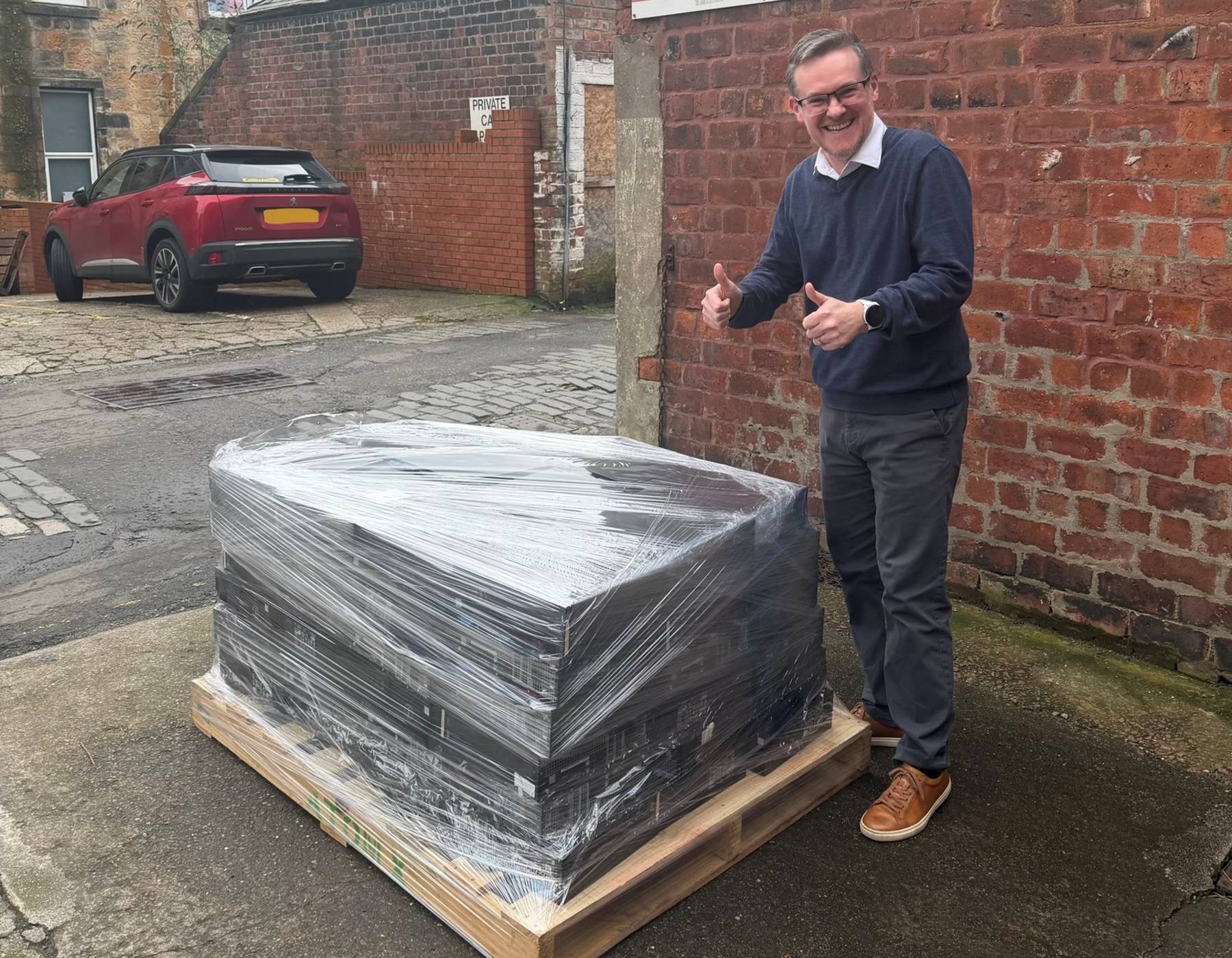
Our IT Donation Supporting Digital Access and SustainabilityWe’re proud to share that we recently donated a large quantity of IT equipment to The Turing Trust, a fantastic charity dedicated to reducing digital inequality while protecting the environment.
As technology continues to evolve, access to reliable devices and digital resources is more important than ever for education, employment, and everyday life. Unfortunately, many schools and communities around the world still face significant barriers when it comes to accessing this technology. By supporting organisations like The Turing Trust, we can help ensure that equipment which is no longer needed can be given a second life where it is truly valuable.
In total, the donation included:
100+ keyboards and mice
70+ PCs
5 laptops
4 monitors
Rather than allowing these items to go to waste, they have been passed on to The Turing Trust where they will be refurbished, repaired where necessary, and prepared for reuse. The charity then distributes these devices to schools and community organisations across the globe, helping young people gain access to technology and develop vital IT skills that are essential for modern education and future careers.
Alongside improving access to digital learning, the work carried out by The Turing Trust plays an important role in protecting the environment. By refurbishing and repurposing IT equipment, the charity significantly reduces electronic waste and prevents large amounts of technology from ending up in landfill. Extending the lifespan of these devices also helps reduce the demand for new hardware, lowering the overall environmental impact associated with manufacturing and disposal.
We’re delighted that our donation will contribute both to expanding educational opportunities and supporting more sustainable technology use. Initiatives like this highlight how businesses can play a role in creating positive social and environmental impact simply by ensuring that valuable resources are reused wherever possible.
A huge thank you to the team at The Turing Trust for the incredible work they do in making technology accessible to those who need it most while promoting responsible reuse of IT equipment.
You can see the figures below demonstrating the positive impact this donation has had on both the environment and education. If you’d like to learn more about the impact The Turing Trust is making around the world, visit their website: https://turingtrust.co.uk/
-

HPMS News:
TPI Scotland Launches Manifesto for Safer, Better-Managed HomesTPI Scotland: A Vision for Safer, Better-Managed Homes
Scotland’s housing stock is at a critical turning point. With a significant proportion of shared homes now requiring urgent or essential repairs, the need for long term, practical solutions have never been clearer. The TPI Scotland Manifesto sets out a clear and compelling vision for improving the safety, sustainability and management of Scotland’s homes, placing homeowners and residents firmly at the centre of decision making.
Published by The Property Institute (TPI), the manifesto outlines a call to action ahead of the 2026 Scottish Parliament elections, focusing on the challenges facing flatted and shared ownership buildings. These are homes where responsibility is often fragmented, maintenance is delayed and costs escalate unnecessarily which are issues the manifesto seeks to address through collaboration, professionalism and reform.
At the heart of the manifesto are three core ambitions: raising standards, improving safety and ensuring sustainability. Together, these pillars recognise that effective property management plays a vital role in protecting residents, safeguarding buildings and supporting the long-term future of Scotland’s housing.
The Foreword to the manifesto is written by David Doran, our Group CEO and Company Managing Director, who reinforces the importance of putting homeowners first, while maintaining the highest professional standards across the sector. As David states in the manifesto, “The principles of TPI Scotland are clear: homeowners must come first, with professional integrity at the forefront of everything we do.” This commitment underpins the manifesto’s proposals and reflects TPI Scotland’s focus on accountability, transparency and trust.
Safety is also a central theme, particularly in relation to long standing building defects. Addressing the ongoing cladding crisis is identified as a priority, with David highlighting the urgent need for progress: “The cladding crisis must be resolved at a faster pace to ensure safer buildings for residents, and compulsory communal building insurance is essential to protect homeowners from further costs.” These measures are positioned as essential steps toward restoring confidence and protecting residents from avoidable financial and safety risks.
Beyond immediate concerns, the manifesto makes the case for structural reforms such as mandatory owners’ associations, regular building inspections and long-term reserve funds. These proposals aim to shift Scotland’s housing system away from reactive maintenance toward planned, preventative care, ensuring buildings remain safe, resilient and fit for the future.
Supporting the manifesto’s development, Gordon Buchanan, Director at Hacking & Paterson Management Services and a TPI Scotland Board Member, chairs the Governance and Policy Working Group. His team played a crucial role in reviewing and approving the manifesto in Scotland, providing insight on both content and structure, and helping develop the communications strategy for its launch. Gordon emphasises that while the manifesto represents a major milestone, “now the work begins to put it into practice to improve Scotland’s homes and communities”.
The manifesto is more than a policy document. It is a roadmap for safer buildings, empowered homeowners and a more sustainable housing system, grounded in professional expertise and a commitment to meaningful change.
-

HPMS News:
The Property Industry Scotland Awards 2026 NomineeWe are delighted to share that Hacking and Paterson Management Services has been nominated at the Property Institute Scotland Awards.
The awards evening brings together familiar faces from across the sector to celebrate excellence, with a drinks reception, three course dinner, and the highly anticipated announcement of this year’s winners, followed by a lively evening of celebrations. Being recognised among such a strong shortlist, judged by an independent and respected panel, is something we are incredibly proud of. We look forward to joining colleagues from across the industry for what promises to be a memorable night and to see whether our nomination turns into an award win.
-

HPMS News:
The appointment of David Doran as Chair of TPI ScotlandA Clear Vision for the Future of TPI Scotland – David Doran steps into the Chair role
The formation of TPI Scotland following the merger between TPI and PMAS marks an important milestone for the Scottish property sector. It represents both continuity and change, bringing together established expertise with a renewed focus on collaboration, professionalism, and progress. Leading this next chapter is Chair David Doran, a well-respected figure who has spent more than 20 years working within the property factoring industry.
David’s appointment as Chair followed his role as Vice-Chair of PMAS and was a natural progression as the newly formed TPI Scotland took shape. Taking over from former PMAS President Neale Bissett, someone David has known and worked alongside within the industry for many years, was both a privilege and a responsibility. His first official engagement as Chair at TPI Connect in October provided the perfect platform to begin the role, and the warm welcome he received from delegates reinforced the collective appetite for a strong, unified voice for the profession in Scotland.
Aligning Change While Retaining Scottish Identity
Over the next three years, David’s vision for TPI Scotland is focused on embedding organisational change in a way that aligns closely with TPI UK policies, while protecting what makes Scotland’s property sector distinct. Scotland’s legislative framework, building stock and ownership models differ significantly from elsewhere in the UK, and TPI Scotland’s strength lies in its highly experienced Scottish practitioners who understand these complexities at a practical, day-to-day level.
Alongside alignment, there is a clear ambition to grow the organisation. This includes increasing membership numbers and broadening participation beyond the traditional discipline of property factoring. By doing so, TPI Scotland aims to enhance its influence, relevance and ability to support a wider range of professionals working across the property landscape.
Putting Homeowners at the Centre of the Conversation
While much public discussion often focuses on the challenges faced by property factors, David is clear that the most pressing issues belong to homeowners across Scotland, particularly those living in multi-occupancy buildings. Many face significant safety, construction and maintenance challenges, including cladding remediation, ageing buildings, and the need to meet modern standards of safety and energy efficiency.
TPI Scotland’s member firms are well positioned to work collaboratively with other key stakeholders such as RICS, the Scottish Government and local authorities to address these challenges directly. However, securing meaningful engagement from homeowners and identifying sustainable financial solutions remain among the greatest obstacles. Ensuring people feel safe, informed and supported in their own homes is fundamental to restoring confidence and driving progress.
Value, Voice and Professional Standards
TPI Scotland offers tangible value to its members through a Board made up of experienced property factoring practitioners who are actively involved in the realities of the sector. This practical insight, combined with TPI’s policy work, constructive relationships with government and a strong programme of professional training and qualifications, underpins continual improvement across the industry.
Members benefit from regular and proactive communication on industry developments, legislative change and regulatory requirements. This ensures professionals remain informed, adaptable and able to deliver consistently high standards of service to homeowners and clients alike.Responding to Legislative Change
Recent housing legislation brings important implications for both homeowners and property factors. For homeowners, the focus on tenant protections, rent controls and energy performance will primarily affect those who rent out their properties. However, the ability for homeowners in developments less than five years old to change their factoring service provider by a simple majority vote, rather than the previous two-thirds requirement, is a welcome and positive change supported by TPI Scotland.
For property factors, amendments to the ‘fit and proper person’ requirements under the Property Factors (Scotland) Act 2011, along with enhanced powers for Scottish Ministers to request information and inspect premises, represent a continued move towards improved transparency, accountability and professionalism within the sector.Strengthening Relationships and Collaboration
Looking ahead, David is keen to strengthen TPI Scotland’s messaging and its relationships with homeowners, government and local authorities. Scottish property is at a pivotal moment, facing intersecting challenges such as building disrepair, net zero targets, retrofit demands, insurance pressures, owners’ associations and the introduction of sinking funds.
David believes TPI Scotland can and should act as a unifying voice, bringing all parties together to collaborate on practical solutions. Addressing these challenges effectively will require openness, shared responsibility and a willingness to work together to achieve outcomes that are both realistic and timely.
As Chair of TPI Scotland, David’s ambition is clear: to help shape a positive, practical narrative for building maintenance and preservation in Scotland. By strengthening collaboration, championing professionalism and focusing on people, he hopes to ensure that the story being told has an ending that works for homeowners, practitioners and communities alike.Andrew Bulmer, Chief Executive of The Property Institute Scotland, welcomed the appointment, highlighting both the significance of the merger and the opportunity it creates for the sector:
“I am excited by the appointment of David as Chair of The Property Institute Scotland Board. The merger of PMAS and TPI presents the perfect opportunity to create a single body and voice of the individual qualified professionals and the firms and Housing Associations that deliver factoring services across the country. David has a clear sight of how that opportunity can deliver better outcomes for residents, and also for the professionals and businesses that serve them. He brings energy, deep insight and long experience to this role at a pivotal time of great progress, and I believe factoring in Scotland is in safe hands just now.”David said:
“It is with great pride that I take on the roles of Chair of TPI Scotland and Board member of TPI UK and I am truly honoured that my peers both North and South of the Border have placed their trust in me to lead our professional body in Scotland and to be part of driving and influencing legislation, regulation and policy across the UK.
The Scottish, English and Welsh property industries are at a truly unique moment in time with multiple pieces of property legislation being implemented, and many more being developed which bring all legislative regimes closer together than ever before. As Chair of The Property Institute Scotland, I hope to bring positive direction to our interactions with all relevant stakeholders and to ensure our professional body continues to be a valued, reasoned and positive voice for all that provide, and all who receive, invaluable service in protecting people’s homes throughout the UK.” -

HPMS News:
Compulsory Owners’ AssociationsThe Scottish Law Commission was asked by the Scottish Government in 2022 to review the law of the tenement in Scotland and make recommendations on the introduction of compulsory owners’ associations for all tenement buildings. Their detailed report on this recommendation, which is aimed at improving how shared property is managed, maintained and repaired, has been published this month.
Tenements remain a dominant form of housing in Scotland, encompassing traditional sandstone buildings, post war developments and modern apartment blocks. While many function well, a significant number experience long standing problems linked to the maintenance of shared parts, including: roofs, external walls, stairwells and drainage systems. The Scottish Law Commission’s proposals seek to address structural weaknesses in the current legal framework that can make collective decision making difficult and, in some cases, ineffective.
The current position
At present, owners’ associations in tenements are typically informal and voluntary. While some title deeds provide management arrangements, many are outdated, incomplete or unclear. Where no effective structure exists, decisions about repairs and maintenance can be delayed or prevented altogether due to lack of agreement, difficulty contacting owners, or uncertainty about legal authority.
Existing legislation, including the Scottish Tenements Act 2004, provides mechanisms for decision making but these can still be challenging to operate in practice. The absence of a single, legally recognised body for each tenement often results in fragmented responsibility, poor communication and difficulties in enforcing decisions or collecting funds.
The proposal for compulsory owners’ associations
The Scottish Law Commission recommends that every tenement should automatically have an owners’ association created by law on a designated date. This would remove the voluntary nature of associations and ensure a consistent structure across Scotland’s tenement housing stock.
Under the proposals, each owners’ association would have legal personality. This means the association could act in its own name, separate from individual owners. It would be able to hold funds, enter contracts, instruct professionals and take legal action if required. This represents a significant shift from the current position, where such actions often depend on individual owners acting jointly.
Core responsibilities and requirements
The draft legislation sets out several basic requirements for owners’ associations. These include:
- Responsibility for the management and maintenance of shared parts of the building
- The appointment of a manager or property factor
- The holding of annual general meetings
- The preparation and approval of an annual budget
- The maintenance of key information about the building, ownership and management arrangements
- These requirements are intended to provide a minimum standard of governance while allowing flexibility in how individual tenements operate.
- Management and professional involvement
A key aspect of the proposals is the expectation that owners’ associations would appoint a manager or property factor. While not prescribing how management must be delivered, the Commission recognises that professional management is often necessary to ensure compliance with legal obligations, coordination of repairs and financial administration.
The proposals do not remove the role of property factors; rather, they formalise and clarify the relationship between owners, associations and managing agents. This is intended to improve transparency, accountability and consistency across the sector.Financial planning and long-term maintenance
One of the underlying concerns addressed by the report is the lack of forward planning for building maintenance. Many tenements rely on reactive repairs rather than planned maintenance, which can lead to higher costs and greater disruption over time.
By requiring owners’ associations to set budgets and manage funds collectively, the proposals aim to encourage a more proactive approach. While the report focuses primarily on governance structures, it sits alongside wider policy discussions about building inspections, reserve funds and long-term maintenance planning.
Benefits and limitations
Supporters of the proposals argue that compulsory owners’ associations would make it easier to organise repairs, improve building standards and protect the long-term condition of Scotland’s tenement housing. A clear legal structure could reduce disputes, simplify decision-making and ensure that responsibility for shared property is properly allocated.
However, commentators have also noted that compulsory associations are not a complete solution. Effective outcomes will still depend on engagement from owners, realistic financial planning and access to professional expertise. The proposals provide a framework, but their success would rely on how they are implemented and supported in practice.
Wider context
The report reflects growing concern about the condition of Scotland’s built environment, particularly in urban areas with large numbers of older tenements. Issues such as climate resilience, building safety and sustainability have increased the importance of effective collective management.
The proposals are also aligned with broader efforts to modernise property law and ensure that legal structures reflect contemporary housing realities, including mixed tenure buildings and absentee ownership.What happens next?
The Scottish Law Commission’s recommendations are not law at this stage. The report and draft Bill have been submitted to the Scottish Government, which will decide whether to introduce legislation based on the proposals.
If taken forward, the reforms would represent one of the most significant changes to tenement management in Scotland in recent decades. Transitional arrangements and further guidance would be required to support implementation and ensure that owners, managers and professionals understand their responsibilities.The full report can be read here